


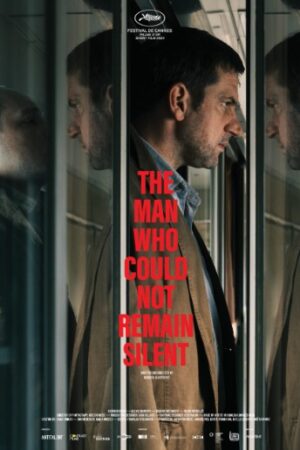
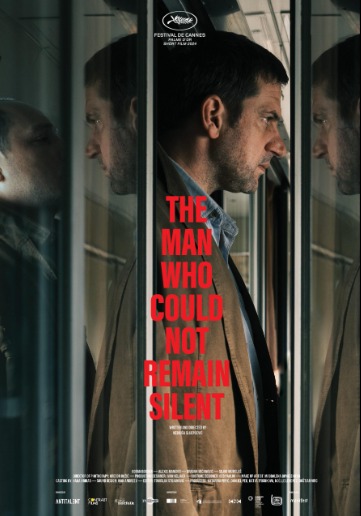
The man who could not remain silent
1993. A passenger train from Belgrade to Bar is stopped by paramilitary forces in an ethnic cleansing operation. As they haul off innocent civilians, only one man dares to stand up to them. This is the true story of a man who could not remain silent.
- Original title: Čovjek koji nije mogao šutjeti
- Country: Croatia
Stars

ON & OFF SCREEN
In just under 15 minutes, Čovjek koji nije mogao šutjeti (The Man Who Could Not Remain Silent) manages to confront one of the darkest and most underrepresented tragedies of the Balkan Wars — the 1993 Štrpci massacre. Directed by Nebojša Slijepčević, this powerful Croatian short film has made waves across the global film circuit, earning the Palme d’Or for Best Short Film at Cannes 2024 and a nomination at the 97th Academy Awards.
But what makes this film so haunting is not just its artistic excellence — it’s the real story behind it.
✍️ A Real Hero in an Age of Silence
The film is based on the true account of Tomo Buzov, a retired Croatian army officer who stood up against Serbian paramilitaries aboard a train in Bosnia and Herzegovina during the height of the Yugoslav Wars.
On February 27, 1993, a train traveling from Belgrade to Bar was halted in the town of Štrpci by armed members of a Serbian paramilitary unit. Nineteen passengers — mostly Bosniak (Bosnian Muslim) men — were forcibly removed from the train and later murdered. The attack was part of a larger pattern of ethnic violence aimed at “cleansing” territories during the Bosnian War.
Tomo Buzov, a passenger on the train, protested. Despite the danger, he refused to remain silent in the face of such brutality — a rare act of moral resistance in a time when silence was often the only way to survive. He was ultimately killed along with the victims he tried to defend.
🎥 How the Film Captures This Moment
Čovjek koji nije mogao šutjeti portrays this event with haunting simplicity. Slijepčević chooses a minimalist, claustrophobic setting — the train car itself — to explore the psychological tension and moral choices of the characters. The silence of the other passengers becomes as loud as the violence outside.
This is not a war film filled with explosions or grand battles. It’s about conscience, cowardice, and courage. It asks: what would you do if you were there?
🧠 Historical and Political Context
The Bosnian War (1992–1995) was marked by some of the worst atrocities in Europe since World War II, including the Srebrenica genocide and the siege of Sarajevo. Ethnic divisions among Bosniaks, Croats, and Serbs were manipulated by nationalist leaders to justify horrific campaigns of violence.
The Štrpci massacre, while lesser-known than other events, remains one of the most painful scars of that era. For years, the incident was swept under the rug — few were held accountable until decades later, when court proceedings finally brought some of the perpetrators to justice.
By revisiting this story, The Man Who Could Not Remain Silent forces audiences to remember and reckon with this brutal chapter of history.
🎞️ Why This Film Matters Today
In a world where authoritarianism and xenophobia are once again on the rise, Čovjek koji nije mogao šutjeti feels chillingly relevant. It reminds us that resistance can come in the smallest of gestures — and that speaking out, even when it’s dangerous, matters.
For movie lovers, history buffs, and human rights advocates alike, this is not just a film — it’s a call to action.
There are no reviews yet.