



The Future Awaits
In July 1942, during the Vel’ d’Hiv’ Roundup of Jewish families in Paris, 13 year old Tauba Birenbaum and her parents, who are Polish Jews, find refuge in a tiny room for the next 765 days. Living conditions are tough and they fear being discovered at any moment. But while her parents sink further into despair, Tauba’s fighting spirit shines through. She finds joy in every little thing, from a piano drawn on the floor, to the views of Paris through an open window. Despite extreme circumstances, she will keep hope until the liberation of Paris, and take back control of her life.
- OriginalTitle: La vie devant moi
- Country: France
- Language: French
Stars




ON & OFF SCREEN
Behind the Scenes: Real vs. Fiction in La vie devant moi (2025)
La vie devant moi, directed by Nils Tavernier, tells the harrowing true story of Tauba Zylbersztejn, a Jewish teenager who spent over two years in hiding with her parents in Nazi-occupied Paris. The film meticulously reconstructs her journey of survival, offering a poignant reflection on historical memory, resilience, and the human spirit.
The Real Story Behind the Film
In July 1942, Tauba Zylbersztejn and her family narrowly escaped the Vel’ d’Hiv Roundup, one of the largest mass arrests of Jews in France during World War II. Over 12,000 Jewish men, women, and children were detained by French police and sent to concentration camps, marking one of the darkest chapters in French history. Seeking refuge, Tauba and her parents found shelter in a small maid’s room in the 10th arrondissement of Paris, where they remained hidden for 765 days, relying on the kindness of a few brave individuals to survive. The film portrays the extreme psychological and physical strain of their confinement—the isolation, the constant fear of discovery, and the difficulty of securing food and resources. Through Tauba’s perspective, La vie devant moi highlights the silent suffering of thousands who went into hiding during the war, and the moral dilemmas faced by those who chose to help them.Historical Accuracy in the Film
- Depiction of the Vel’ d’Hiv Roundup: The film captures the terrifying efficiency of this mass arrest, showing the role of both German occupiers and French authorities in the deportations.
- Everyday Life in Hiding: The claustrophobic cinematography effectively conveys the oppressive reality of living in fear for over two years, emphasizing the resilience of those who survived.
- Post-War Trauma: Unlike many war films that end with liberation, La vie devant moi explores the long-lasting psychological scars carried by survivors, including Tauba’s struggle to reintegrate into a changed world.
Dramatic Liberties and Fictional Elements
While La vie devant moi remains largely faithful to historical events, some creative liberties were taken:- Composite Characters: Some secondary figures, such as the neighbors and members of the Resistance, may be fictionalized or amalgamated for narrative efficiency.
- Dialogue and Emotional Arcs: Personal exchanges and emotional beats were likely dramatized to enhance the story’s emotional impact.
- Perspective: The film closely follows Tauba’s point of view, which means some external historical events may be simplified or altered for coherence.
The Broader Impact of the Story
The legacy of the Vel’ d’Hiv Roundup and the persecution of Jews in France remains a significant and painful part of the country’s history. It wasn’t until 1995 that French President Jacques Chirac officially acknowledged the country’s role in the deportations, marking a turning point in public reckoning with the past. The release of La vie devant moi contributes to ongoing discussions about Holocaust memory, the responsibilities of bystanders, and the dangers of intolerance. By bringing Tauba Zylbersztejn’s story to the screen, the film ensures that new generations confront this past, fostering historical awareness and empathy.Conclusion
La vie devant moi is more than a historical drama—it’s a testament to survival, courage, and the enduring need to remember. By blending meticulous historical detail with deeply personal storytelling, Nils Tavernier’s film sheds light on a lesser-known story of the Holocaust, ensuring that voices like Tauba’s are never forgotten.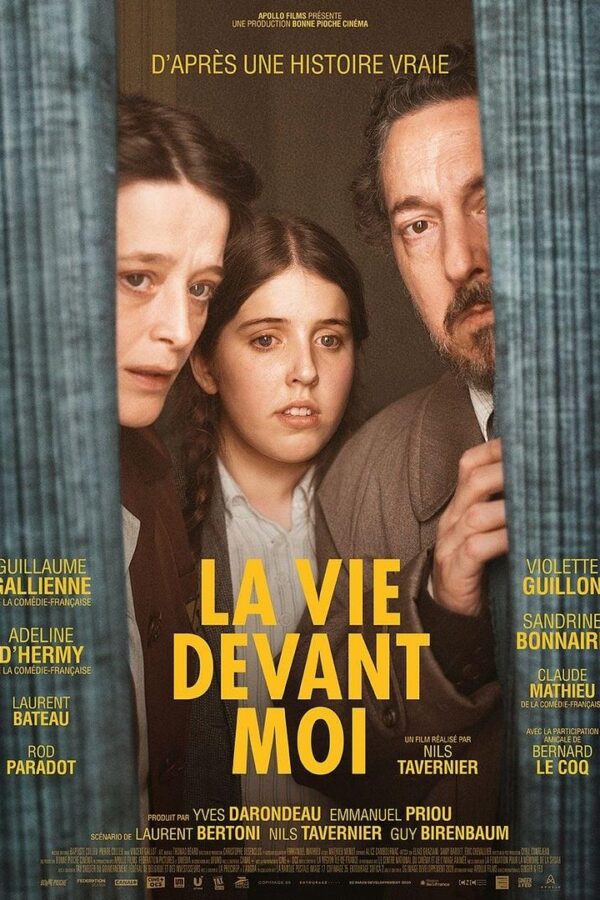
There are no reviews yet.