





Amaran
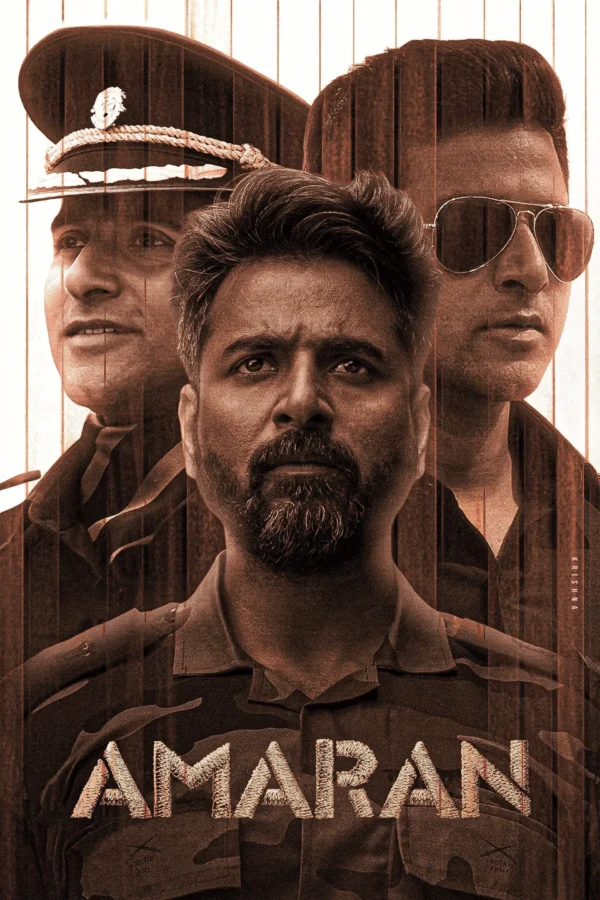
A heroic true story of Major Mukund Varadarajan, an Indian Army officer who displayed extraordinary bravery during a counterterrorism mission in Kashmir’s Shopian district. The film captures his courage in protecting his nation and the devotion of his wife Indhu Rebecaa Varghese.
- Original title: Amaran
- Country: India
Stars





ON & OFF SCREEN
A Stirring Real-Life Saga of Bravery, Love, and Loss
Amaran, directed by Rajkumar Periasamy and starring Sivakarthikeyan and Sai Pallavi, is not just a military drama—it’s a hauntingly emotional tribute to a real Indian Army officer who gave his life in the line of duty. Released in 2024, this Tamil-language film is based on the true story of Major Mukund Varadarajan, a decorated soldier of the Indian Army who was posthumously awarded the Ashoka Chakra, India’s highest peacetime gallantry award.
But what makes Amaran stand out is not just its storytelling—it’s how it captures the emotional toll of conflict, the weight of duty, and the cost of violence. The film masterfully blends personal drama with political tension, providing a layered view of India’s battle against terrorism.
The True Story: Who Was Major Mukund Varadarajan?
Major Mukund Varadarajan served in the 44 Rashtriya Rifles, a unit of the Indian Army specialized in counter-insurgency operations in Jammu and Kashmir, a region long marred by political conflict, militancy, and civil unrest.
In April 2014, during an anti-terrorist operation in the Shopian district of Kashmir, Major Mukund led a mission that resulted in the elimination of three Hizbul Mujahideen militants. Despite being critically wounded, he continued to lead until the operation was complete. He later succumbed to his injuries.
His bravery, selflessness, and unwavering sense of duty made him a national hero. Amaran brings his story to the screen with dignity, paying homage not just to him, but to all soldiers who fight silent battles far from home.
Sai Pallavi’s Role: A Voice of Quiet Strength
Sai Pallavi plays Indhu Rebecca Varghese, Mukund’s wife, who was left behind to raise their daughter alone. Her performance is subtle, heartfelt, and deeply human. Rather than portraying a grieving widow in clichés, Pallavi embodies resilience and love, portraying how women in military families bear invisible burdens of loss and pride.
Her character represents thousands of women whose personal lives are entwined with the nation’s geopolitics—never holding a weapon, but still fighting a war of their own.
Political and Social Context: Kashmir and the Indian Army
Set against the backdrop of Kashmir in the 2010s, Amaran does not shy away from showing the complex political realities of the region. Kashmir has been a flashpoint between India and Pakistan for decades, and internal militancy has cost thousands of lives—both civilian and military.
During Major Mukund’s deployment, the Indian Army was intensifying counter-terrorism operations in areas like Shopian, Pulwama, and Anantnag. Militants often used civilian spaces for cover, turning villages into battlegrounds. The film portrays these tense, morally complex missions with a mix of realism and restraint.
It also reflects the rising sense of nationalism in India during this period, showing how public opinion often glorifies military actions without understanding the psychological impact on soldiers and their families.
How Accurate Is Amaran?
Amaran is one of the rare Indian films that treats real-life military heroism with nuance. While the film dramatizes certain moments for cinematic effect, it stays true to the heart of Major Mukund’s story. The battle sequences, personal conversations, and emotional aftermath are grounded in truth and supported by research, testimonies, and military records.
The production team consulted with real army officers and Mukund’s family to ensure authenticity. Sai Pallavi’s scenes were reportedly inspired by real letters, journal entries, and interviews.
Final Thoughts: A Film That Honors Without Romanticizing
For movie buffs and history enthusiasts alike, Amaran is essential viewing. It strikes a rare balance—offering edge-of-your-seat war sequences while delivering a deeply personal, human story. More than a biopic, it’s a historical record of love, loss, and the invisible costs of conflict.
As India continues to grapple with questions about national security, military ethics, and the human toll of war, Amaran invites us to pause—and remember that behind every uniform is a beating heart, and behind every medal, a sacrifice that cannot be repaid.
There are no reviews yet.