


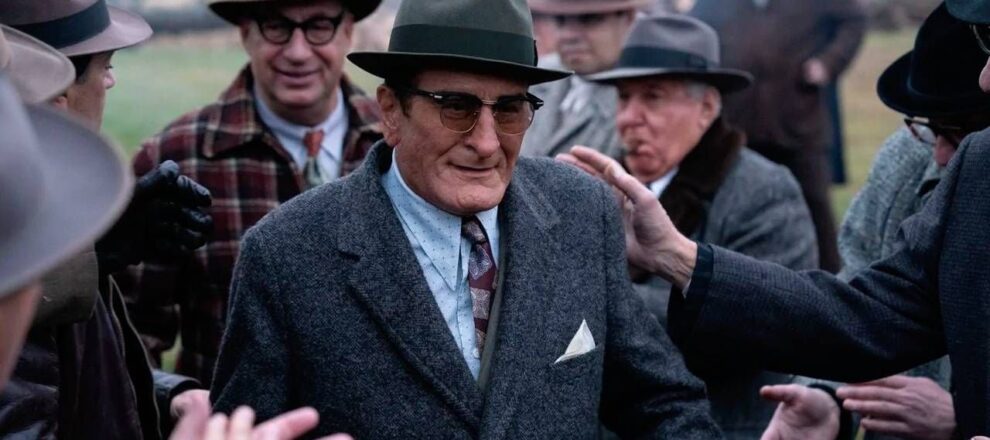
Few actors are as synonymous with the gangster genre as Robert De Niro. Thanks to The Alto Knights and director Barry Levinson, the legendary actor steps back into the world of organized crime—this time in a double role. The film, inspired by real events, revisits the power struggles that shaped the American underworld and influenced some of the most iconic crime films in history.
The Alto Knights: Robert De Niro’s Mafia Legacy Comes Full Circle
Two of New York’s most feared crime figures, Frank Costello and Vito Genovese, wage war for control of the city. Once close allies, their ambitions and betrayals ultimately lead them into a deadly rivalry—one that signals the downfall of the American Mafia as it once stood.
De Niro Doubled
Can anyone direct Robert De Niro in a mafia film without inviting comparisons to his past work? That’s the challenge Barry Levinson embraces with The Alto Knights. Not only does he reunite with De Niro, whom he previously directed in Sleepers, Wag the Dog, What Just Happened, and The Wizard of Lies, but he also entrusts him with a rare double role. De Niro portrays both Costello and Genovese—two men whose real-life power struggles in the 1950s and ’60s shaped organized crime.
At first glance, these names may not ring a bell, but their influence on cinema is undeniable. Vito Genovese has been portrayed by actors like Lino Ventura (Cosa Nostra, 1972) and Charles Cioffi (Lucky Luciano). Meanwhile, Frank Costello’s real-life persona helped inspire the anxiety-ridden mafioso in Analyze This, played by none other than De Niro himself. Costello also appears in Levinson’s Bugsy and served as a key inspiration for Tony Soprano, the antihero of The Sopranos.
A Mafia Film About Mafia Films
In many ways, The Alto Knights doesn’t just tell a mob story—it reflects the legacy of mob cinema itself. Costello was one of the real-life figures who influenced Don Vito Corleone in The Godfather. Marlon Brando and De Niro both won Oscars for playing him in The Godfather and The Godfather Part II, respectively. Now, De Niro comes full circle, embodying another key figure in the history of organized crime.
The film’s screenplay, penned by Nicholas Pileggi (Goodfellas), brings echoes of Scorsese’s classics, The Godfather, Once Upon a Time in America, and The Irishman. De Niro, with the sheer weight of his past performances, naturally evokes these films, creating a meta-textual experience where art imitates life and vice versa.
The Origins of the Double Role
How did De Niro end up playing both Costello and Genovese, much like Tom Hardy in Legend? The idea came from producer Irwin Winkler (Rocky). Originally, De Niro was cast solely as Frank Costello. But when asked who should play Genovese, Winkler had an epiphany: Why not De Niro himself? The suggestion was spontaneous, but it intrigued the actor.
“They are two sides of the same coin,” De Niro explains. “Costello is more diplomatic and calculated, while Genovese is impulsive and erratic.” Levinson adds, “As young men, they were nearly inseparable. But over time, they didn’t just drift apart—they became enemies.”
A Tribute and a Conclusion
The Alto Knights is more than a historical crime drama; it’s a reflection on the very genre that made De Niro an icon. The rise of Frank Costello recalls The Godfather, while the film’s final moments evoke The Irishman. Genovese’s violent and erratic nature, paired with De Niro’s striking transformation, conjures images of Joe Pesci in Goodfellas and other volatile figures from De Niro’s past roles.
Ultimately, the film serves two purposes: it sheds light on a lesser-known chapter of American history, and it celebrates the legacy of one of cinema’s greatest actors in the crime genre. If De Niro were to retire from playing mobsters, The Alto Knights would be the perfect sendoff.